

 Tiếng Việt

Can You Get a Crown While Pregnant? Detailed Answers from Experts
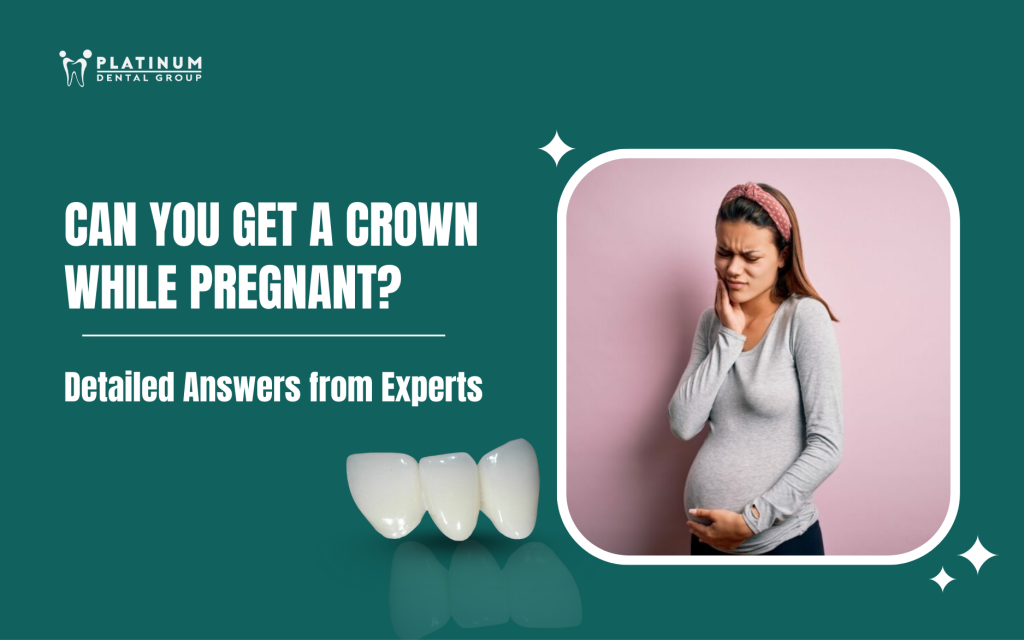

Pregnancy is a sacred journey where every priority shifts towards the health and safe development of the unborn baby. However, hormonal changes during this period can lead to various dental issues, or perhaps an expectant mother simply wishes for a brighter smile to confidently capture beautiful moments. This is when the question, “Can you get a crown while pregnant?” becomes a major concern.
To help expectant mothers get the most accurate, scientific, and reassuring answer, let’s analyze every aspect of this issue with the experts at Platinum Dental Group.
Nội dung bài viết
- 1 Expert Answer: Can You Get a Crown While Pregnant?
- 2 Why Do Experts Advise Caution When Getting Crowns During Pregnancy?
- 3 Safety Levels for Dental Crowns by Trimester
- 4 Important Notes for Pregnant Women When Visiting the Dentist
- 5 Platinum Dental Group – Accompanying Safe Smiles for Expectant Mothers
- 6 Frequently Asked Questions (FAQs)
Expert Answer: Can You Get a Crown While Pregnant?
The primary and unified advice from both dental and obstetrics experts is: You should DELAY cosmetic dental crown procedures until after giving birth unless it is medically necessary.
Pregnancy is a period when a mother’s body is extremely sensitive. The process of getting a porcelain crown, although a common technique, involves interventions such as tooth reduction (grinding), local anesthesia, and X-rays, all of which carry potential avoidable risks for the fetus. Therefore, if your goal is purely to improve aesthetics (slightly yellowed teeth, uneven shape), waiting until after delivery and the conclusion of breastfeeding is the wisest and safest choice.
However, in mandatory pathological cases, such as:
- Teeth with severe decay or large fractures that cannot be filled.
- Teeth with pulpitis (inflammation of the pulp) or necrosis requiring root canal treatment, which subsequently needs a crown for protection.
- Teeth broken due to trauma, affecting chewing function.
In these situations, getting a crown may be considered to protect the mother’s oral health. Nevertheless, the final decision must be made after a thorough examination and consultation, with consensus from both the dentist and the obstetrician. The timing of the procedure must also be chosen with extreme caution.
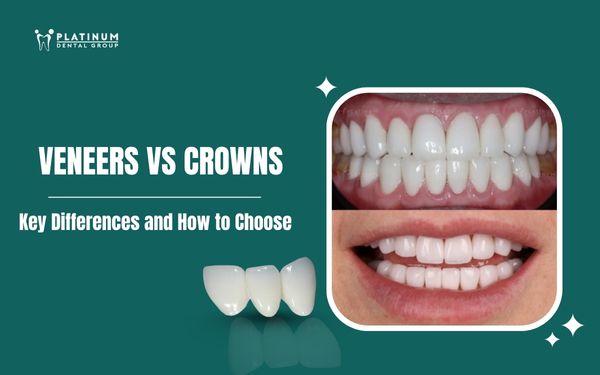
See also: An overview of teeth Veneers
Why Do Experts Advise Caution When Getting Crowns During Pregnancy?
The recommendation for pregnant women to be cautious is well-founded. Below are the potential risks involved in the dental crown process that could directly affect the health of both mother and baby.
Risks from X-rays
To accurately assess the condition of tooth roots, jawbones, and potential underlying pathologies, taking X-rays (such as Cone Beam CT 3D) is an indispensable step in diagnosis. Although modern clinics like Platinum Dental Group are equipped with advanced machinery emitting very low radiation and use lead aprons for protection, the absolute safety principle during pregnancy is to avoid all unnecessary exposure to X-rays, especially during the first trimester. X-rays can pass through the body and pose potential risks to cell division and fetal development.
Impact of Local Anesthesia
The process of grinding teeth to create abutments requires the use of local anesthesia to prevent pain. The issue is that certain active ingredients in anesthetics can cross the placental barrier and affect the baby’s nervous system. While doctors can select safer anesthetics with strictly calculated dosages, minimizing the introduction of any medication into the body during this period remains the number one priority.
Gum Sensitivity Due to Hormonal Changes
The sudden surge in Progesterone and Estrogen hormones during pregnancy increases blood flow to the gums, making them swollen, soft, and more sensitive. This condition is known as pregnancy gingivitis and is very common among expectant mothers. Dental procedures such as grinding teeth or taking impressions near the gum line can easily cause bleeding, worsen inflammation, and prolong healing time.
Psychological Stress from Prolonged Treatment
Getting porcelain crowns is not a quick procedure. It requires multiple appointments, and the time spent in the dental chair can be lengthy. For pregnant women, especially in the final months, lying in one position for a long time can cause fatigue, back pain, and shortness of breath. Furthermore, noise from dental equipment and anxiety during treatment can cause stress, raise blood pressure, and negatively affect the mental and general health of both mother and baby.
Safety Levels for Dental Crowns by Trimester
If treatment is mandatory, the timing of the intervention is the key factor determining safety. Pregnancy is divided into three trimesters with varying levels of risk.
First Trimester (First 3 Months): A sensitive period; absolutely avoid procedures
This is the stage where the fetus’s most critical organs—such as the heart, brain, and nervous system—are forming. The fetus is extremely sensitive to external agents at this time. Any medical intervention, medication use, or X-rays during this period carry a high risk of causing birth defects. Therefore, absolutely no porcelain crowns or non-emergency dental procedures should be performed during the first 3 months.
Second Trimester (Middle 3 Months): The “Golden Time” if dental treatment is mandatory
The period from week 14 to week 26 (months 4 to 6) is considered the “safety window” for necessary dental interventions. By this time, the fetus has developed relatively stably, organs are formed, and the risk of influence from external factors has significantly decreased. The mother has also passed the morning sickness stage and feels stronger and more comfortable. If a porcelain crown is mandatory, this is the ideal time.
Third Trimester (Last 3 Months): Limit procedures due to the mother’s health and comfort
From week 27 onwards, the mother’s large belly makes moving and lying on the dental chair for long periods difficult. Lying flat on the back for a long time can put pressure on the inferior vena cava, obstructing blood flow and potentially causing supine hypotensive syndrome, leading to dizziness for the mother and reduced oxygen to the fetus. Therefore, dental procedures should be maximally limited, resolving only the simplest emergency issues.
Important Notes for Pregnant Women When Visiting the Dentist
To ensure the dental exam and treatment proceed safely, expectant mothers need to be proactive:
Inform the doctor accurately about your pregnancy status and gestational age
This is the most important information you need to provide right when booking the appointment. Knowing exactly how many weeks pregnant you are will help the doctor plan safe treatment and choose suitable materials and medications.
Discuss medications being used (if any)
Please list all medications you are taking, including supplements, iron, calcium, medication for underlying conditions (diabetes, hypertension, etc.), and other functional foods. This helps the doctor avoid dangerous drug interactions.
Special Oral Care During Pregnancy
- Brush properly: Use a soft-bristled toothbrush and fluoride toothpaste; brush gently 2-3 times/day.
- Clean between teeth: Use dental floss or a water flosser daily to remove plaque and prevent gingivitis.
- Healthy diet: Increase foods rich in calcium (milk, cheese, green vegetables) and vitamin D. Limit sweets, starch, and carbonated drinks to reduce the risk of tooth decay.
- Handling morning sickness: If you vomit, rinse your mouth immediately with water or non-alcoholic mouthwash to neutralize the acid. Wait at least 30-60 minutes after vomiting before brushing, as the tooth enamel is weak at this time and easily eroded.
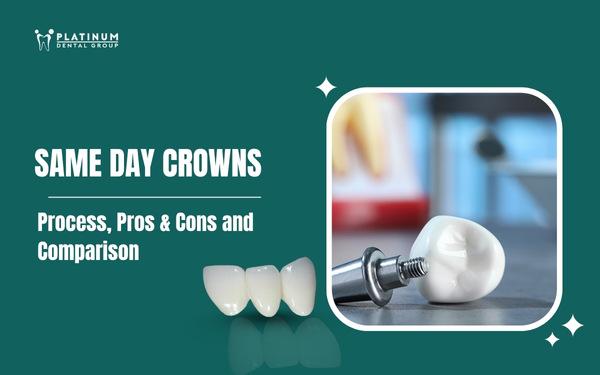
See also: Key aspects of Crown Dental solutions
Platinum Dental Group – Accompanying Safe Smiles for Expectant Mothers
At Platinum Dental Group, we deeply understand that the health and safety of mother and baby are priorities that cannot be traded. With the philosophy “perfect aesthetic beauty must go hand in hand with long-term health,” we are committed to providing the safest, most professional, and dedicated dental care environment for pregnant mothers.
When coming to Platinum Dental Group, you will have complete peace of mind because of:
- A team of leading expert doctors with over 16 years of experience: You will be directly examined and consulted by top experts. The combination of extensive expertise and vast clinical experience allows our doctors to provide treatment indications that are “right for the person, right for the time,” explaining every risk thoroughly so expectant mothers can be completely reassured.

- Dr. Tran Lan Anh: Founder of Platinum Dental, dubbed “Top 1 Veneer in Vietnam” with over 16 years of specialized experience in minimally invasive aesthetic restoration. Having trained in France, Canada, and Spain, she ensures every treatment indication adheres to the strictest international medical standards, prioritizing maximum preservation of the original teeth for expectant mothers.
- Dr. Duong Minh Tung: Currently Deputy Head of the Maxillofacial Surgery Department at the HCMC Odonto-Stomatology Hospital. With training and experience in Taiwan, the USA, and France, Dr. Duong Minh Tung is capable of accurate diagnosis, absolute risk control, and proficient handling of complex dental situations.
- International standard processes, absolute sterility: We strictly adhere to European hygiene and sterilization standards, ensuring an absolutely safe treatment environment.
- Modern equipment: Advanced machinery systems such as the Cone Beam CT 3D scanner (only taken when strictly indicated) and the iTero 5D intraoral scanner make the examination process gentle, precise, and comfortable.
- Understanding and dedicated care: We always listen, share, and create a relaxing treatment space, helping pregnant mothers reduce stress and anxiety.
If you are pregnant and have any concerns about your oral health, let Platinum Dental Group accompany you. We will care for your smile in the safest way possible, so you can confidently and radiantly welcome the new member of your family.
Frequently Asked Questions (FAQs)
Can I whiten my teeth while pregnant?
The answer is NO. Teeth whitening uses chemicals with strong oxidizing properties. Although there is no specific evidence of harm, no studies confirm it is 100% safe for the fetus. Therefore, to ensure absolute safety, you should postpone teeth whitening until after giving birth.
Is scaling (tartar removal) safe while pregnant?
YES, it is very safe and highly recommended. Scaling is a non-invasive procedure that does not require anesthesia and is extremely necessary to remove bacterial plaque. This helps to effectively prevent and treat pregnancy gingivitis, keeping the mother’s oral cavity clean and healthy.
The health and radiant smile of an expectant mother are our happiness. Come to Platinum Dental Group today to be examined and consulted by a team of leading experts. Don’t miss out on special offers and oral care packages designed specifically for pregnancy! Contact us immediately for peace of mind and a healthy, glowing pregnancy!
Learn more:
- General insights into Dentistry Implants
- Overview of the cost of a single tooth Implant
- Introduction to all on four Dental Implants near me
- General information about full mouth Dental Implants near me
Platinum Dental Group
Clinic Locations:
📍Platinum Dental Central: 127 Nguyen Cu Trinh Street, Cau Ong Lanh Ward, Ho Chi Minh City
📍Platinum Dental Thao Dien: 1H Street 10, An Khanh Ward, Ho Chi Minh City
📞 Hotline: (+84) 28 3920 9969 | 096 779 7799
✉️ Email: info@platinumdentalvietnam.com
🌐 Website: https://platinumdentalvietnam.com/
💬 Instagram: https://www.instagram.com/platinumdental.vietnam/
🔗 Facebook: https://www.facebook.com/platinumdentalvn
Articles on the same topic