

 Tiếng Việt

What is Root Resorption? Causes, Consequences, and Effective Solutions
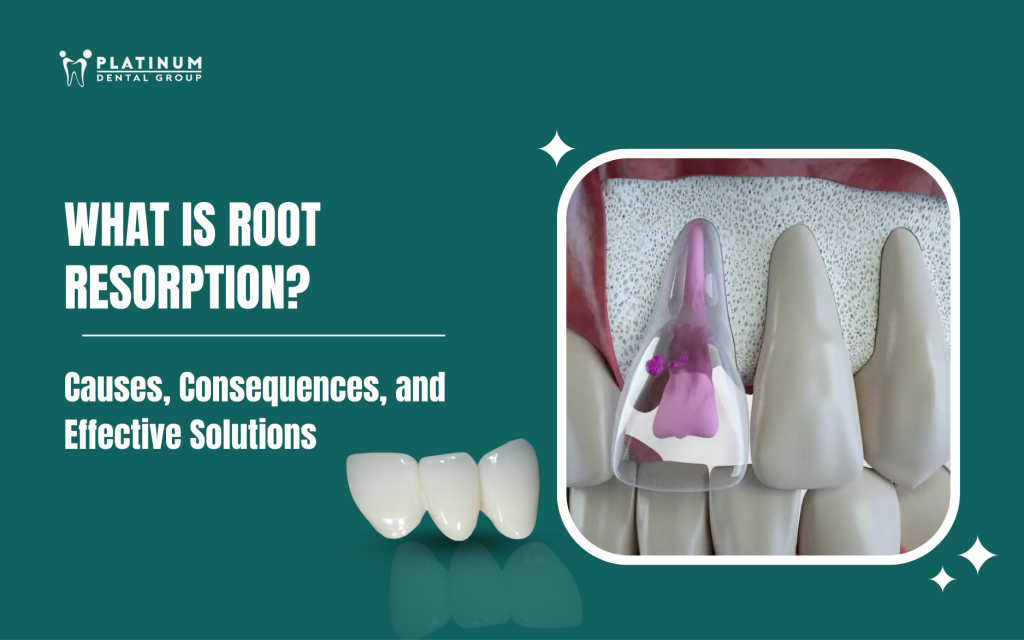

Root resorption is a prevalent condition that can occur due to periodontal disease, trauma, or the natural aging process. When the root structure breaks down or is lost, the jawbone in that area begins to deteriorate, significantly impacting chewing ability, facial aesthetics, and overall oral health. The following article by Platinum Dental Group will help you understand the causes and consequences of this condition, as well as the most suitable restorative methods to regenerate lost structure and restore both function and natural beauty to your smile.
Nội dung bài viết
- 1 What is Root Resorption?
- 2 Signs and Symptoms of Root Resorption
- 3 Causes of Root Resorption
- 4 Does Root Resorption Have Serious Consequences?
- 5 Common Methods to Fix Root Resorption and Tooth Loss
- 6 How Much Does an Implant Cost to Replace a Resorbed Root?
- 7 How Soon Should You Restore a Tooth After Root Resorption?
- 8 Platinum Dental Group – Effective Solutions for Root Resorption
- 9 Frequently Asked Questions (FAQ)
What is Root Resorption?
Defining Root Resorption
Root resorption is the progressive loss of dentine and cementum, resulting in the breakdown of the tooth root (the part embedded deep in the jawbone, responsible for supporting and anchoring the tooth). When this occurs, the root may be damaged, dissolved by the body, or require surgical removal. Consequently, the entire support structure of the tooth is lost, meaning the tooth cannot naturally regenerate.

In many cases, the crown of the tooth may break off or be extracted, but the root remains in the jawbone. However, if left untreated, this residual root can become inflamed, infected, or undergo further root resorption, leading to the total loss of dental structure. This condition is commonly seen in middle-aged and elderly individuals, or in cases of prolonged periodontal disease and facial trauma.
Distinguishing Between “Root Resorption/Loss” and “Total Tooth Loss”
To fully understand the condition, it is important to distinguish between compromising just the root versus losing both the root and crown:
- Loss of the Crown: This occurs when the visible part of the tooth (the crown) breaks, chips, or decays, but the root remains intact within the jawbone. In this scenario, the dentist can often save the root and restore the tooth using a post-and-core buildup and a porcelain crown.
- Loss of Both Root and Crown (Total Tooth Loss): This is when the entire tooth is lost. Consequently, the empty space in the dental arch lacks natural structural support, and the jawbone at that location will gradually resorb (shrink).
- Root Resorption (Root Only): This is a specific pathological process. The root shortens or dissolves due to periapical inflammation or trauma. Both scenarios usually lead to an indication for extraction and replacement with an Implant or dental bridge.

The Importance of the Tooth Root for Oral Health
The tooth root acts as a solid “foundation” that anchors the tooth within the jawbone. When root resorption leads to tooth loss:
- The alveolar bone is no longer stimulated by chewing forces → Natural bone resorption occurs.
- Loss of support leads to → Adjacent teeth shifting and bite misalignment.
- Facial structure changes, causing sunken cheeks or sagging skin around the mouth.
Therefore, understanding and properly treating root resorption is essential for preserving long-term oral health.
Signs and Symptoms of Root Resorption
Early detection allows for timely intervention, minimizing bone loss and preserving oral structures. Below are signs you can observe during your daily oral care routine.
Visual Inspection of the Mouth
One of the easiest ways to identify the issue is to directly observe the suspected area.
- If the area appears sunken, the root is not visible, or there is a deep depression in the gum, it is likely the root has undergone severe resorption or is completely gone.
- Adjacent teeth may tilt slightly into the gap, creating a crooked look or an uneven bite sensation.
- In some cases, the gum tissue at the site may change color (paler or darker than usual) and feel concave to the touch.

If you notice these signs, you should visit a dental clinic for an X-ray to determine if any root structure remains in the jawbone or if root resorption has occurred.
Pain or Gum Swelling
Following the breakdown or loss of a tooth root, the surrounding gum tissue and alveolar bone often suffer mild trauma, causing dull pain, swelling, or bleeding when brushing.
- Some patients feel pain radiating to adjacent teeth or increased pain when chewing hard foods.
- If a resorbed or decayed root fragment remains, the gums may develop pus or small periodontal pockets, causing bad breath and chronic inflammation.
These symptoms are warning signals that the body is reacting to an imbalance in the bone and soft tissue, requiring immediate examination.
Symptoms of Jawbone Atrophy Due to Root Resorption
If the space left by root resorption or loss is not restored promptly, the jawbone at that location will begin to atrophy due to the lack of stimulation.

Common manifestations include:
- Mild facial asymmetry or sunken cheeks, especially in the incisor and canine regions.
- Adjacent teeth becoming loose or drifting apart, creating gaps.
- An unbalanced sensation when chewing or speaking, a misaligned bite, or difficulty pronouncing words clearly.
At this stage, treatment becomes more complex, potentially requiring bone grafting before Implant placement. Therefore, early recognition and intervention are key.
When Should You See a Dentist?
If you notice loose teeth, persistent gum pain, a depression in the area of a missing tooth, or changes in your facial shape, you should visit a dentist immediately for imaging and bone assessment.
At Platinum Dental Group, doctors will conduct a comprehensive exam, take 3D X-rays, and determine whether Implant placement or bone preservation intervention is necessary. Early diagnosis makes the recovery process significantly simpler, gentler, and more effective.
Causes of Root Resorption
Root resorption results from various factors, ranging from oral diseases to mechanical impacts or the body’s natural physiology. Understanding the causes helps in prevention and selecting the right treatment.
Oral Diseases (Periodontitis, Severe Decay…)
Oral diseases are the most common cause leading to root breakdown.
- Periodontitis: This causes inflammation of the gums and periodontal ligaments. Left untreated, the inflammation triggers cells that break down the root surface and alveolar bone, eventually leading to tooth loss.
- Severe Tooth Decay: If decay spreads to the pulp and root, bacteria destroy the hard tissue, causing infection. If endodontic treatment is not performed, the infection spreads, causing the root to disintegrate beyond repair (inflammatory root resorption).

Regular check-ups every 6 months and treating oral diseases early is the best prevention method.
Accidents and Facial Trauma
Strong impacts during daily activities, sports, or traffic accidents can cause teeth to break or damage the periodontal ligament.
- Trauma is a leading cause of external root resorption, where the body attacks the root surface after an injury.
- If the root is cracked or the pulp is exposed, the tooth weakens and may need to be extracted.
In cases of dental trauma, seek immediate dental care to stabilize the tooth if it can be saved, preventing accelerated resorption.
Necessary Tooth Extraction
Extracting a tooth is sometimes unavoidable due to massive decay or severe periodontitis. Once extracted, the physical root is gone. While necessary for treating infection, the loss of the root leaves the jawbone prone to resorption over time, affecting aesthetics and adjacent teeth.

Doctors always recommend early restoration after extraction to maintain bone structure and facial aesthetics.
Natural Aging Process
Over time, bone density and connective tissues weaken. In middle-aged and elderly individuals, gums may recede and periodontal ligaments lose elasticity.
- This process happens silently; initially, teeth may feel slightly loose, but eventually, the root support is compromised.
- Systemic conditions like osteoporosis or diabetes can accelerate the breakdown of bone and root support.
A diet rich in calcium and Vitamin D, combined with regular dental visits, helps mitigate the risk.
If you are experiencing loose teeth, swollen gums, or persistent pain, you should visit a dental clinic promptly to evaluate the condition of your tooth roots. Early diagnosis helps prevent bone loss, preserve natural teeth, and allows for the selection of appropriate restorative methods—especially Dental Implants, which are a vital solution for maintaining jawbone structure and sustainable chewing function over the long term.
Does Root Resorption Have Serious Consequences?
Root resorption involves serious consequences for oral health and jaw structure. Many patients believe “losing just one tooth root is fine,” but in reality, the hidden consequences progress silently and are difficult to reverse if not treated early.
Jawbone Resorption and Facial Deformation
When the root resorbs or is removed, the alveolar bone loses natural stimulation from chewing forces and begins to resorb. Over time, the jawbone atrophies, causing the gums to collapse. The face tends to look sunken (hollow cheeks), the mouth may look puckered, and wrinkles appear around the lips.
Impaired Chewing Ability
Missing roots mean chewing force is not distributed evenly. Adjacent teeth must bear a heavier load, leading to enamel wear, loosening, or fractures. Furthermore, insufficient chewing forces the digestive system to work harder, affecting the stomach and nutrient absorption.
Shifting Teeth and Bite Misalignment
When a root is lost due to resorption, adjacent teeth tend to tilt or drift into the empty space, causing malocclusion (bite misalignment). Over time, this leads to unbalanced chewing, increased risk of Temporomandibular Joint (TMJ) pain, and abnormal enamel wear.

Increased Risk of Other Oral Diseases
The gap left by a missing or resorbed tooth is a trap for food debris and bacteria, increasing the risk of gingivitis, cavities, and bad breath.
Impact on Aesthetics and Communication
Missing teeth, especially front teeth, make smiles look unnatural and reduce confidence in communication.
Common Methods to Fix Root Resorption and Tooth Loss
Selecting the right restoration method is crucial for long-term function and aesthetics. Depending on the extent of root resorption, bone condition, and budget, the doctor will advise the optimal solution. Currently, there are three common methods in modern dentistry: Removable Dentures, Dental Bridges, and Dental Implants.
Traditional Porcelain Bridges
A dental bridge is a fixed restoration method that uses two healthy adjacent teeth as anchors (abutments) to support a porcelain bridge that fills the gap left by the lost root.

- Pros: High aesthetics, relatively natural chewing sensation, quick completion time.
- Cons: Requires grinding down two healthy adjacent teeth. Furthermore, because there is no artificial root, bone resorption still occurs at the missing tooth site.
Removable Dentures
Removable dentures are a traditional option for multiple missing teeth or full jaw loss resulting from severe resorption.
- Pros: Low cost, quick process.
- Cons: Cannot prevent bone loss, weak retention compared to real teeth, and can be bulky.
Dental Implants – The Optimal Solution
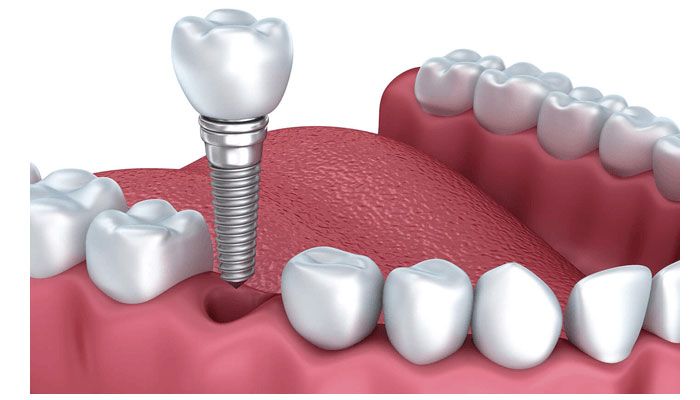
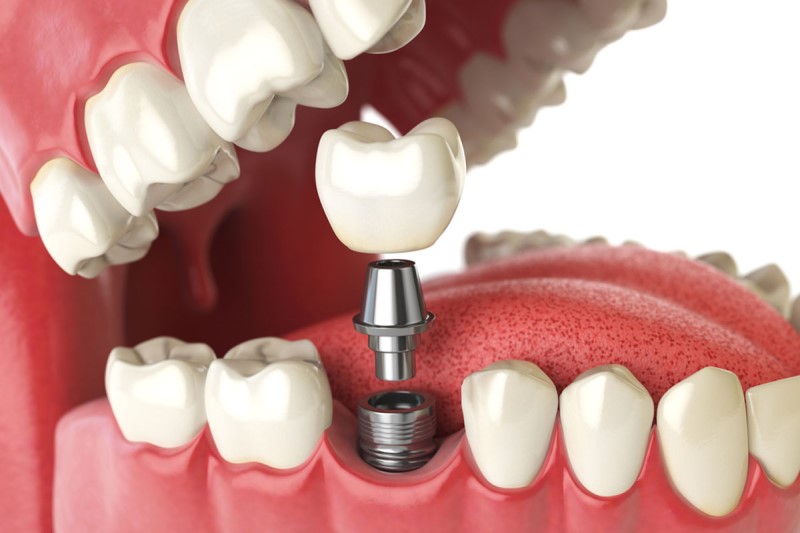
Implant placement is currently the most advanced method and is considered the “Gold Standard” for addressing root resorption and loss. The doctor places a Titanium post into the jawbone to serve as a new, artificial root, then attaches a porcelain crown on top.

Pros:
- Restores complete tooth structure, preventing jawbone resorption.
- High durability, can last a lifetime with proper care.
- Does not affect adjacent teeth.
- Chewing sensation and aesthetics are nearly identical to natural teeth.
Cons:
- Higher cost compared to other methods.
- Requires sufficient jawbone density for placement.
At Platinum Dental Group, doctors conduct direct examinations and 3D CT scans to assess bone density, then advise on the most suitable restoration plan.
How Much Does an Implant Cost to Replace a Resorbed Root?
The cost depends on factors such as the brand of the Implant post, bone condition, and the doctor’s expertise. At Platinum Dental Group, all procedures follow international standards.

For your reference, here is the price list for Implant packages at Platinum Dental Group. These prices include the Implant post, surgery, prosthetic abutment/crown, and follow-up visits:
| Service | Implant Type | Origin | Package Price (VND) | Warranty |
| Single Implant | Implant DIO UV | Korea | 18 – 25 million/post | 5-7-10 years |
| Implant ETK | France | 30 – 36 million/post | 5-7-10 years | |
| Implant Straumann | Switzerland | 38 – 45 million/post | 5-7-10 years | |
| Abutment + Cercon Porcelain Crown on Implant | Implant DIO UV | Korea | 8 million/post | 5 years |
| Implant ETK | France | 10 million/post | 7 years | |
| Implant Straumann | Switzerland | 13 million/post | 10 years | |
| ALL ON 4 (Full Jaw) | Implant DIO UV | Korea | 150 – 160 million/jaw | 10 years |
| Implant ETK | France | 200 – 240 million/jaw | 10 years | |
| Implant Straumann | Switzerland | 230 – 270 million/jaw | 10 years | |
| ALL ON 6 (Full Jaw) | Implant DIO UV | Korea | 180 – 200 million/jaw | 10 years |
| Implant ETK | France | 280 – 315 million/jaw | 10 years | |
| Implant Straumann | Switzerland | 340 – 390 million/jaw | 10 years | |
| Bone Grafting | Sinus Lift/Regional Graft | 5 – 10 million | ||
| Open Sinus Lift + Graft | 10 – 15 million | |||
| Full Jaw Bone Graft | 50 – 70 million |
How Soon Should You Restore a Tooth After Root Resorption?
Many patients wonder about the right time to get an Implant after a tooth is lost to root resorption. In reality, the longer you delay, the higher the risk of bone resorption and gum deformation.
Ideal Timing for Implant Placement
Generally, the best time is 1-3 months after tooth loss. This is when the gum tissue has healed, and the alveolar bone is stable, facilitating accurate implant placement.

In special cases, doctors may recommend “Immediate Implant Placement,” meaning the post is placed right after extraction if the bone is healthy and infection-free.
Delayed Restoration
If you wait too long (from 6 months to several years), the bone at the site will atrophy, causing gum recession and bite shifts. In such cases, bone grafting or sinus lifts are often required before placing the Implant. Therefore, implanting as soon as possible is always encouraged.
Platinum Dental Group – Effective Solutions for Root Resorption
Restoring teeth lost to root resorption requires precision, modern technology, and high expertise. At Platinum Dental Group, our Implant process is designed to be Safe – Effective – Durable.
Highly Qualified Medical Team
All procedures are performed by a team of Maxillofacial and Implant specialists with years of experience, trained internationally. Doctors directly examine and plan the treatment, ensuring precision and optimal results.

Modern Technology and Equipment
- 3D CT Cone Beam: Assesses bone density and nerve position.
- Premium Implant Systems: Genuine posts from Korea, USA, France, and Switzerland.
- 3D Digital Scanning: Captures clear, realistic images of the dental arches.
- Navigation Surgery (Dynamic Guidance): Allows doctors to track the drill in real-time, placing implants with absolute precision in 3D space.
- PIC System Technology: A digital impression system for precise full-arch treatments.
International Standard Recovery Process
Our procedures follow international standards. Every case begins with a comprehensive check-up and imaging. The Implant placement is performed in a sterile environment using modern tech to reduce invasiveness and speed up healing.

Dedicated Post-Operative Care
We provide dedicated aftercare to ensure rapid healing. Doctors provide detailed instructions on hygiene, medication, and diet. Our nursing team monitors your condition closely in the initial days.
Frequently Asked Questions (FAQ)
Can I get a porcelain bridge if I’ve had root resorption?
If only the crown is damaged but the root is intact and healthy, a crown is fine. However, if root resorption has destroyed the root foundation, a standard bridge can fill the gap but cannot replace the root, leading to eventual bone loss. Implants are recommended.
Can a resorbed root be filled (dental filling)?
Fillings are only for cavities on the crown. You cannot “fill” a root that has resorbed or disappeared. The optimal solutions are Implants, bridges, or dentures.
Can I just get a crown over a missing root?
No. A crown needs a foundation (a natural root or an Implant). If root resorption has occurred, you need an Implant to support the crown.
Can I get full-jaw Implants if I have lost many roots?
Absolutely. For multiple missing teeth due to severe resorption, we can use the All-on-4 or All-on-6 techniques. This uses just 4 to 6 Implant posts to support a full fixed arch of teeth.
Is Implant surgery painful?
Implant placement is a minor surgical procedure performed under local anesthesia, so you will feel almost no pain during the process. Afterward, there may be mild swelling or dull ache for 1-3 days, which is manageable with medication.
Learn more:
- Understanding how Implants teeth are used
- General information about Veneer teeth
- General information about the cost of full mouth Dental Implants
- General information about Dental Crown treatment
- Important information about all on 4 Dental Implants near me
- General information about full mouth Dental Implants near me
Platinum Dental Group
Clinic Locations:
📍Platinum Dental Central: 127 Nguyen Cu Trinh Street, Cau Ong Lanh Ward, Ho Chi Minh City
📍Platinum Dental Thao Dien: 1H Street 10, An Khanh Ward, Ho Chi Minh City
📞 Hotline: (+84) 28 3920 9969 | 096 779 7799
✉️ Email: info@platinumdentalvietnam.com
🌐 Website: https://platinumdentalvietnam.com/
💬 Instagram: https://www.instagram.com/platinumdental.vietnam/
🔗 Facebook: https://www.facebook.com/platinumdentalvn
Articles on the same topic